
Gas Logs Are Getting More Realistic
New Designs and Burner Technology Reshape the Fireplace for 2026
AUBURN HILLS, Mich. Oct. 5, 2026 — Gas logs are entering a new era of realism as manufacturers rethink not only how artificial logs look, but how flames move through them, how embers glow and how much of the burner and control system homeowners can see.
Sales of birch, aspen, charred, weathered and driftwood-style gas logs increased 14% from January–August 2025 to January–August 2026.
New products from several leading gas log manufacturers in 2026 point in the same direction: homeowners are being offered gas fires that more closely recreate the depth, irregularity and character of burning wood, while adding the ignition and flame controls expected from a modern gas appliance.
“Realism in gas logs used to be primarily about how accurately the ceramic logs reproduced a piece of wood,” said Janelle Fanelli, business account manager at Woodland Direct. “Now manufacturers are looking at the entire fire — where the flame originates, how it moves through the logs, how the ember bed glows and even how effectively the mechanical components disappear from view.”
Flames Are Becoming Part of the Log
One of the most significant changes is happening underneath — and increasingly inside — the logs themselves.
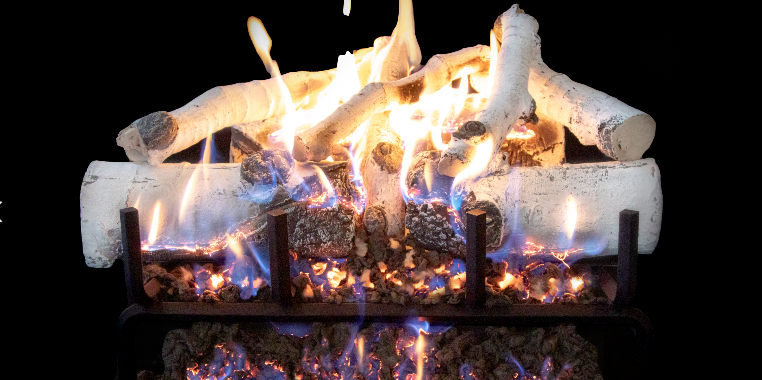
Grand Canyon Gas Logs' Aspen Birch Charred GlowFire Gas Log Set uses the company's Lava Burner and GlowFire technology, with precision-engineered fuel ports incorporated into individual ceramic refractory logs. Instead of relying solely on flames rising from a burner beneath the set, the design allows flames to emerge through the logs, creating additional depth and the appearance of wood actively burning. The new Aspen Birch version combines the technology with bright birch detailing and black charred areas and is available in 18-, 24-, 30- and 36-inch sizes.
Grand Canyon says the system is also designed to produce a fuller flame with fewer BTUs and offers electronic ignition with either on/off operation or variable flame modulation.
Monessen is taking a different approach to the same challenge. Its new Moxie gas log set combines Burncrete Hybrid technology — intended to combine the detail and strength of concrete with the glow characteristics of fiber — with the company's Glow Getter Burner. The burner produces a glowing ember bed along with glowing logs and can be paired with IntelliFire Plus intermittent-pilot ignition.
“Those developments are important because a convincing fire isn't created by the log mold alone,” said Fanelli. “Flame depth, glowing embers, charred surfaces and the interaction between the flame and the logs all contribute to whether the finished fireplace looks natural.”
Birch, Aspen and Charred Wood Expand Beyond Traditional Oak
Oak remains a staple of the gas log category, but some of the newest introductions show manufacturers broadening the types of wood they recreate.
Grand Canyon's Gas Logs Aspen Birch Charred GlowFire uses white birch detailing with contrasting charred areas. The company says the original wood used in developing its Aspen designs was sourced from Northern Arizona, with molds created from actual wood before the finished gas logs are hand painted.
Real Fyre has similarly expanded its G52 Radiant Fyre collection with Burnt Aspen and Colonial Oak designs. The G52 system uses fiber-enhanced refractory ceramic logs and a multi-tier burner, while a stainless-steel booster grid is designed to increase fire intensity. Real Fyre offers the system with several operating configurations, including electronic intermittent-pilot ignition and remote variable flame-height control.
The wider range of wood species and finishes gives homeowners more ability to treat the fireplace as part of the room's design rather than choosing from variations of a traditional brown oak log.
Manufacturers Are Making the Hardware Disappear
Greater realism also means making the parts that identify a fireplace as a gas appliance less noticeable.
Superior’s new Nature-Flame Series features a unique pan burner with random flames and a flickering ember bed to achieve the look of a real wood fire. The result is a striking appearance with a distinctly unique flame pattern. Handcrafted logs with high-definition bark and split wood details create the essence of authentic firewood.
“The things manufacturers are trying to hide are just as telling as the things they're adding,” said Fanelli. “A visible valve, receiver or control box immediately reminds you that you're looking at an appliance. Concealing those components lets the logs, flames and ember bed become the focus.”
Remote Ignition and Flame Adjustment Are Changing How Gas Logs Are Used
Convenience is advancing alongside appearance.
Across current products from Grand Canyon, Real Fyre, Hargrove and Monessen, homeowners can find electronic ignition, intermittent-pilot systems, remote operation and variable flame control. Grand Canyon's GlowFire system offers electronic ignition and variable flame modulation; Real Fyre's G52 can combine IPI electronic ignition with remote variable flame-height control; Superior offers lifelike flames through its Nature-Flame Series; and Monessen's IntelliFire Plus system provides intermittent-pilot ignition and programmable memory settings.
Rather than positioning these products as “smart fireplaces,” the development reflects a simpler shift: homeowners can increasingly get the visual character of a traditional fire without giving up push-button operation and control over flame height.
See-Through Fireplaces Put Realism on Display From Both Sides
Gas-log design is also adapting to fireplaces that are part of the architecture of the room itself.
See-through fireplaces create a particular challenge because the log arrangement, flame and burner can be viewed from opposite sides. Manufacturers including Grand Canyon, Real Fyre, Empire and Rasmussen currently produce gas-log systems designed for these installations.
These installations can turn the fireplace into a divider between living and dining spaces or allow one fire to be viewed from adjoining rooms. Unlike a conventional front-facing log set, however, the logs and flame presentation need to remain convincing from more than one viewing angle.
The Gas Log Is Becoming a Complete Fire Experience
The newest products suggest the industry's focus is moving beyond simply manufacturing a more realistic ceramic log.
Grand Canyon is putting flame ports into individual logs. Real Fyre is introducing new Burnt Aspen and Colonial Oak designs while using a booster grid to intensify the fire. Monessen is combining concrete and fiber characteristics to create logs that both reproduce wood detail and glow.
Together, those developments point toward a broader objective for the category: reproducing the complete experience of a wood fire while retaining the convenience that makes homeowners choose gas in the first place.
“There's still something distinctive about a real wood fire,” said Fanelli. “But every generation of gas logs is getting better at recreating the parts people love about it — the depth of the flame, irregular wood, glowing embers and charred surfaces — without requiring homeowners to haul, store and burn wood.”
As the 2026–27 fireplace season begins, the next stage of gas-log development appears increasingly focused on making the technology less visible and the fire itself more convincing.
About Woodland Direct
Woodland Direct is a premier online retailer specializing in fireplaces, patio heaters, fire pits, and outdoor living products. Founded in 2004, Woodland Direct offers a curated selection of top fire brands to homeowners, contractors, and businesses. Woodland Direct has the most NFI-certified sales professionals and Master Hearth Professionals under one roof. For more information, visit woodlanddirect.com