By: Tiffany Kurilla, NFI Certified Master Hearth Professional

Fireplace Grates Buying Guide
Last Updated: February 11, 2026
A fireplace grate may seem like a simple accessory, but the right one can completely transform how your fireplace performs. From improving airflow and increasing heat output to protecting your firebox and making cleanup easier, a well-chosen grate does far more than just hold logs.
Whether you’re upgrading an old, warped grate or selecting one for a brand-new hearth, understanding the differences in materials, sizing, and design is key to getting the most from your fires.
In this buying guide, we’ll walk you through exactly what to look for so you can choose a fireplace grate that enhances both the beauty and efficiency of your fireplace.
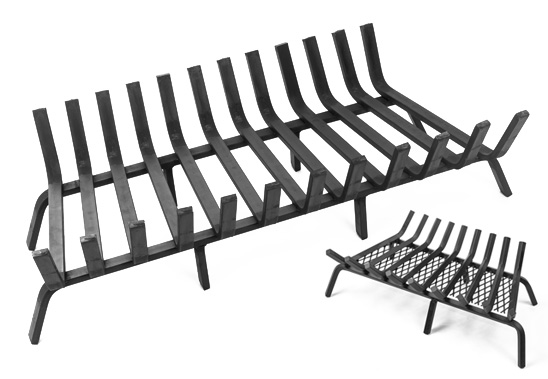
Types of Fireplace Grates
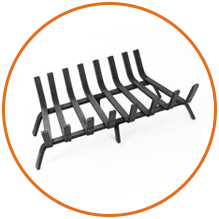
Lifetime

Last Grate You’ll Ever Need
Heavy duty construction available in a range of depths and sizes, as well as customizable options. A lifetime warranty guarantees you’ll never need to purchase another grate.
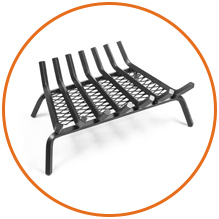
Ember Bed
Longest, Hottest Burn
Designed with steel mesh that holds embers directly under the logs and causes only the ashes to fall below. This leaves less ash build up and a more efficient fire.
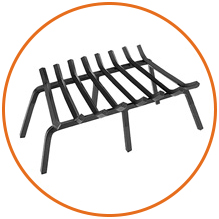
Extra-Tall
Fits a Gas Starter Pipe
Intended for fireplaces with gas starters that require a greater clearance from the floor to the bottom of the grate. The extra height also allows for more airflow beneath the logs.
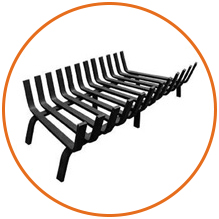
Custom
Any Shape or Size You Want
Gives you the opportunity to choose the exact depth, width and height needed to fit your fireplace. This grate will be designed to fit as a perfect match.
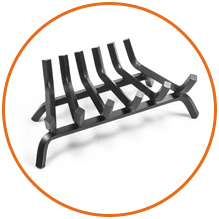
Zero-Clearance
Compact for a Factory-Built Fireplace
Made to accommodate a zero-clearance fireplace, this grate is smaller in size and shallower for a perfect fit in your smaller fireplace.
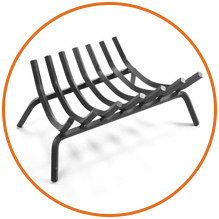
Self-Feeding
Less Work, More Fire
Constructed with a sloped shape, gravity forces logs to fall into the center of the grate causing a longer, more consistent burn. This eliminates putting wood on the fire yourself as the top logs will fall to the embers as the fire burns down.
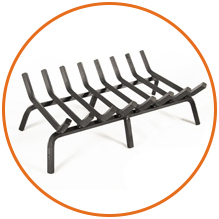
Non-Tapered
For a See-Through Fireplace
With identical front and rear widths, this grate is designed for a see-through fireplace.
Best Fireplace Grate Materials
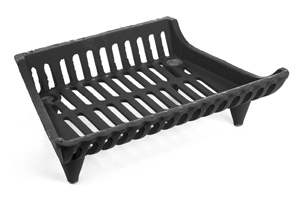
Cast-Iron
More Heat Retention, Longer Burn
Cast from a mold to create a single piece construction, the affordable material is designed to hold in heat. With smaller slots, hot embers are kept in the bed of the grate for a longer burn.
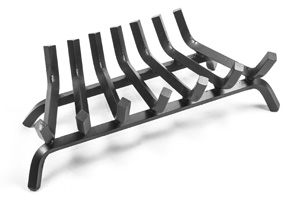
Steel
Durable, Affordable
Heavy-duty and durable, steel bar grates are constructed with flat or diamond shaped tines ranging from 1/2” to 1-1/8” thick.
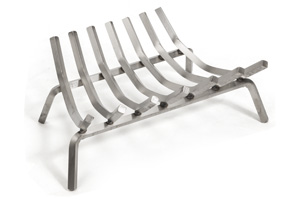
Stainless Steel
For an Outdoor Fireplace
Able to withstand the elements, this material is made for use in your outdoor fireplace or outdoor fire pit. Made of a non-corrosive material, it will not rust through over time.
Measuring for a Fireplace Grate
Making sure your fireplace grate fits your firebox correctly is crucial if you want the best performance from your fireplace.
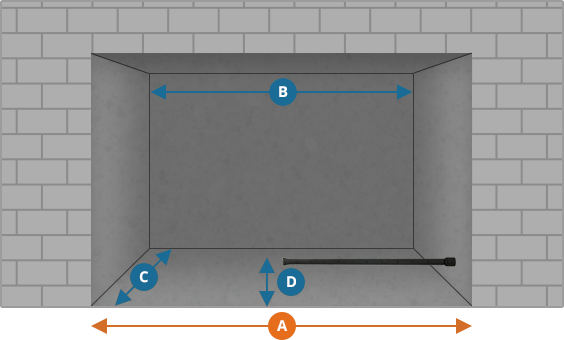
To find the right size fireplace grate, you'll need to take the following measurements:
A. Measure the front width of the fireplace
B. Measure the rear width of the fireplace
C. Measure the depth from the front to back of the fireplace
D. If installed, measure the height of the installed gas starter pipe
Once you have measured your fireplace, subtract 6" from the front width, rear width and depth.
These new dimensions will determine your maximum grate size.
Fireplace Grate Sizing
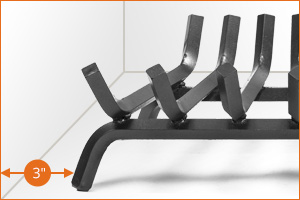
Grate Clearance
It is recommended to have 3" of clearance on all sides of the grate. This ensures optimum performance and safety.
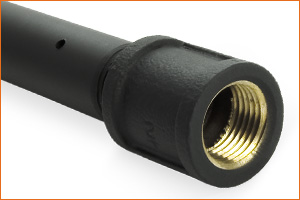
Gas Starter Pipe
If a gas starter pipe is installed in your fireplace, your fireplace grate must be tall enough for the starter pipe to fit below the grate.
FAQs
While it's possible to burn a fire without a grate, you won't get the best performance from your fireplace or stove.
Grates improve airflow to the logs for hotter fires that burn longer and more completely. Without a grate, your fires will be harder to start and maintain.
Yes! A grate that fits properly helps with combustion and safety.
If your grate is too large, it can block airflow and cause smoke to enter the room. On the other hand, a grate that's too small won’t support enough wood for a good fire.
Yes — placing the grate in the center of the firebox (not too far forward or against the back wall) helps promote even airflow and reduces smoke spillage into the room.
We offer high-quality fireplace grates from reputable hearth brands, including:
We're Here to Help
Do you have any questions about fireplace grates? We'd love to help! Call our NFI certified experts at (844) 284-0506 today.
More Resources
Learn how to get more heat from your fireplace with these quick solutions.
Check out our top 6 fireplace doors for a simple way to upgrade the look of your hearth and increase safety!
Thinking of converting your wood burning fireplace to gas? Here's the information you should know first.

Tiffany Kurilla, Technical Sales Representative, has five years of experience at Woodland Direct. As an NFI-Certified Master Hearth Professional, she’s recognized for her deep knowledge of fireplace products and safety standards. Tiffany’s dedication and mastery earned her the title of Woodland’s top sales representative in 2021 and 2022. Outside of work, Tiffany is an avid traveler, exploring national and international destinations. Her favorite spot to visit? The Happiest Place on Earth — Disney World! Call Tiffany or one of our experts in fire at 800.919.1904.